
16 > 27 MAR 2026
E.B.1 Chinicato
Inspired by the project Electronic Cane Toys – a mechanical orchestra created from traditional Algarve toys – this workshop invites children to dive into a universe where craftsmanship meets experimentation.
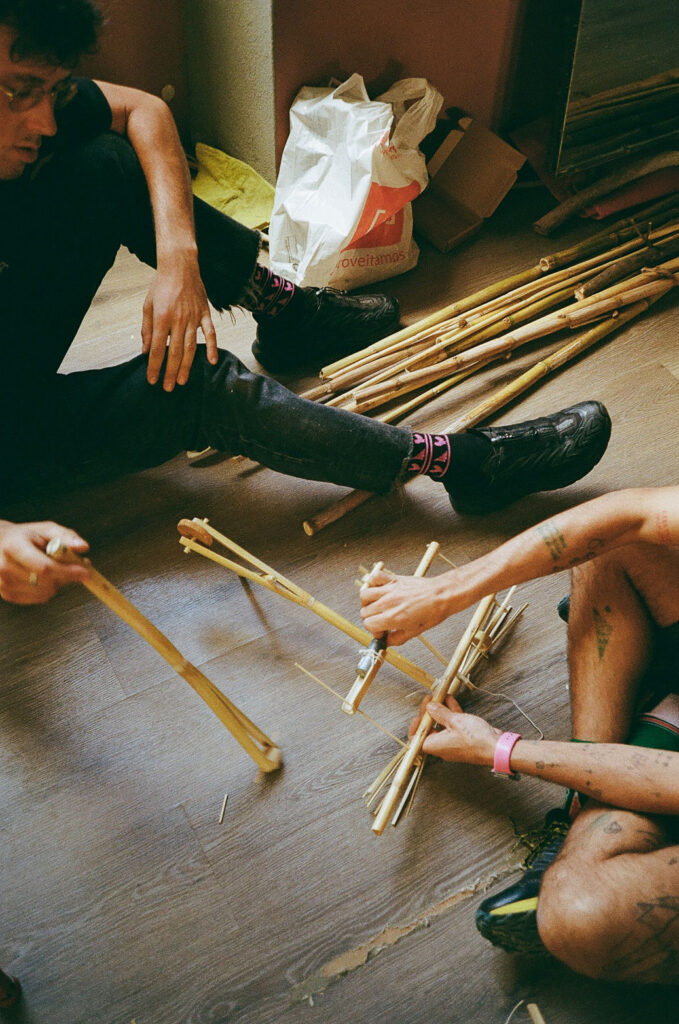
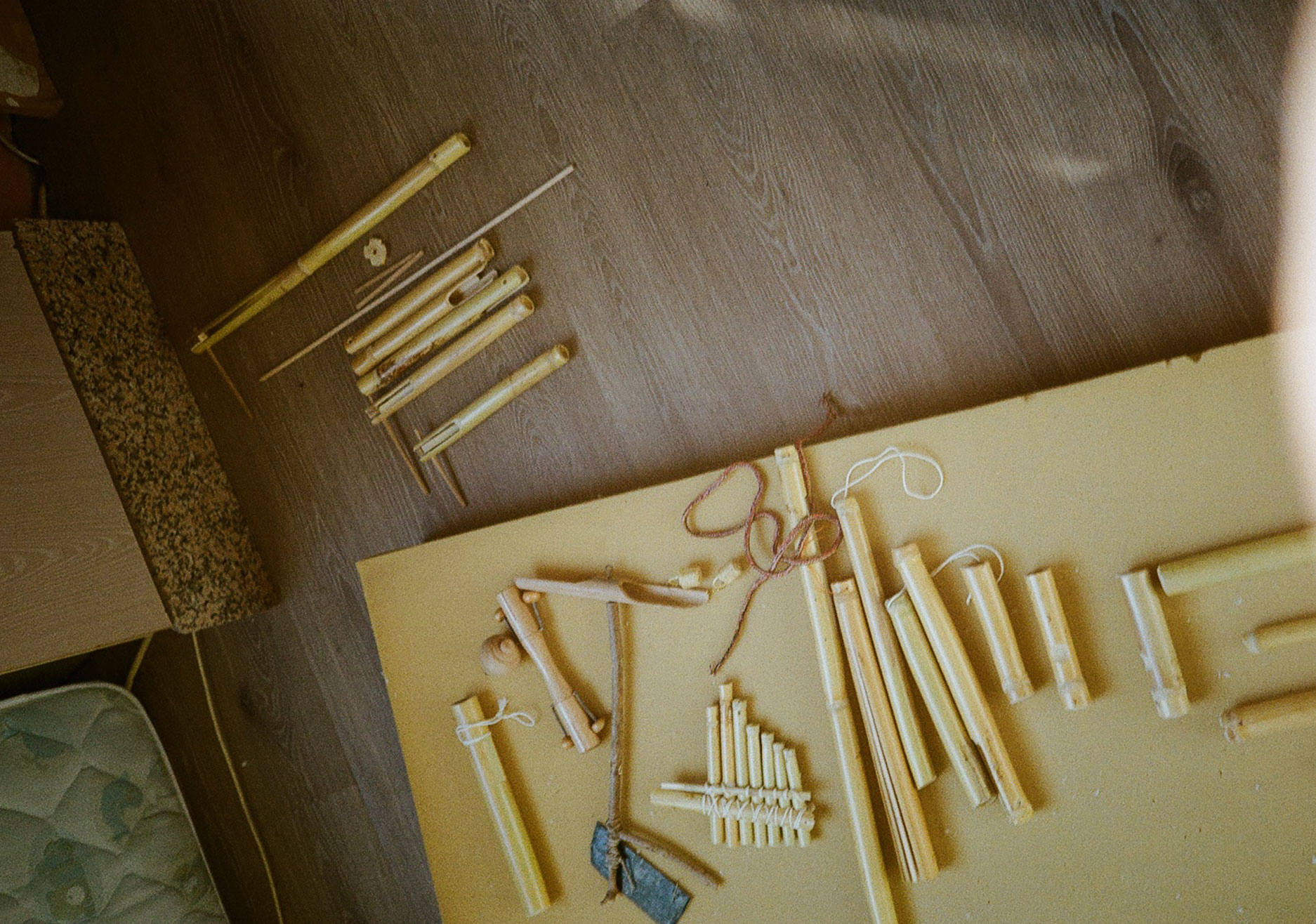
The activity proposes the construction and transformation of giant reed toys, exploring their potential as sound-making and expressive devices.
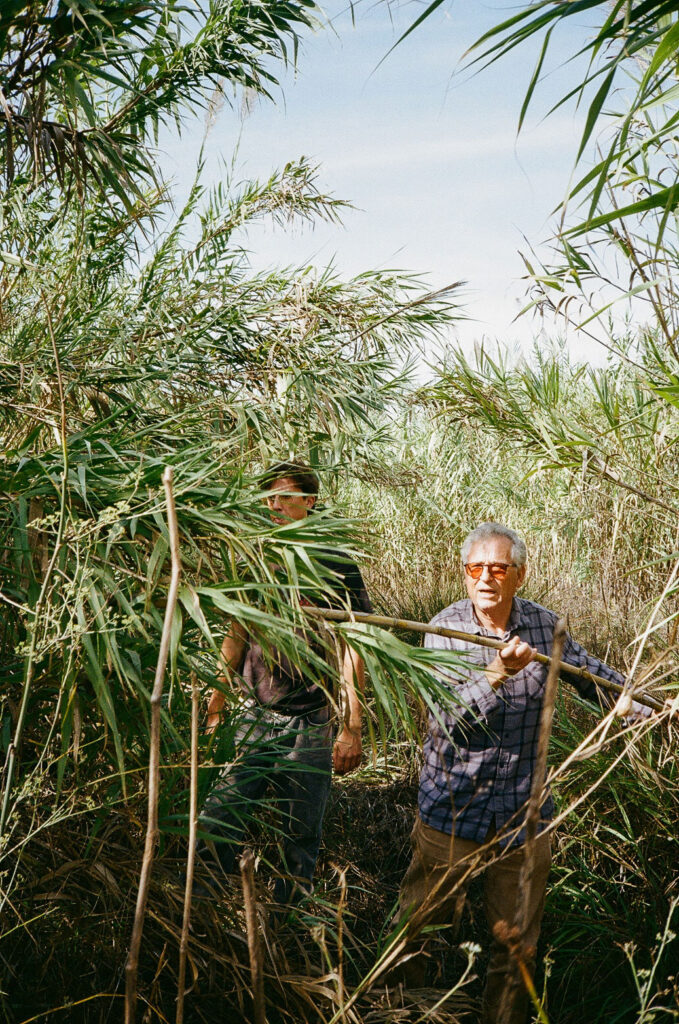
Over the course of two weeks, the children go through two phases: in the first, they learn to build two traditional giant reed toys (the cartaxinho and the roncadeira), following ancestral manufacturing techniques, with master craftsman Domingos Vaz and Carolina Garfo; in the second phase, Sérgio joins the group and, together, we intervene in these objects with motors, wires, and electronic components, bringing them to life through movement and sound.
The workshop offers an accessible introduction to basic electronics concepts, combining folk knowledge with artistic experimentation and collective creation.
Carolina Garfo is a visual artist based in Paradela, Trás-os-Montes. Her work spans ceramics, video, and sound experimentation, with an ongoing interest in traditional practices, folk knowledge, and playful objects, which she revisits through a contemporary and experimental approach. She holds a BA in Sculpture from Faculdade de Belas-Artes da Universidade de Lisboa (2014). She completed a Postgraduate Degree in Sound Art: Experimental Techniques (2024) and attended several visual and performing arts programs and courses, including Maumaus (2016), Estrutura (2021), and FLAD (2023).
She has been exhibiting regularly since 2014. Among her most recent projects are Raverina (Cave, Solar – Galeria de Arte Cinemática, 2025), Raverina’s Dance Floor (British Ceramics Biennial, 2025), Ornitofaunia (Museu Carlos Machado, 2023), and Juegos Tradicionales de La Luna Rosa (Oaxaca, 2022).
Her project Raverina (2023), which brings together ceramics, sound, and fiction, has expanded through collaborations and residencies, such as Brinquedos de Cana Eletrónicos (Faro, 2024) and Raverina’s Dance Floor (Oficinas do Convento, 2024).
She has participated in several artistic residencies in Portugal and abroad, including Bonecreiro (Museu de Olaria, 2021), Cerâmica e Som (TREMOR, 2022), Sonidos de Sud-América (Oaxaca, 2022), and Roda Baixa (Gondar, 2022), where she co-coordinated a residency dedicated to the ancestral Soenga technique, culminating in a collective performance.
Born and raised in the Odeleite area in 1954 – a land known for its basket makers – Domingos Vaz learned the craft by watching his elders at work. At that time, boys would spend their free time mastering giant reed, making toys and weaving baskets. They learned from one another through play.
He later left his hometown and dedicated himself to the railways, living in several cities. He trained as a civil engineer, yet in every new place he sought out giant reed to remain connected to his land and his people. “When I work with reed, I feel as if I’m reading a book about my homeland, my childhood, my family.” He enjoys transforming wild cane – a raw, rugged material – into pieces for a wide variety of purposes.
His affable character and love of teaching have led him to collaborate regularly with Projecto TASA, delivering workshops, short courses, and creative experiences related to reed craftsmanship.
Sérgio Cachibache holds a degree in Multimedia Engineering and a Master’s degree with a specialization in Interactive Music and Sound Design. He is an integral member of the artistic collective berru, founded in 2015 with Bernardo Bordalo and Rui Nó, and is also active in the studio-workshop iodo.
As an artist and researcher, he develops performative pieces, installations, sonic sculptures, and other forms of artistic expression, both conceptually and technically.
He works on projects involving physical computing, electronics, and robotics, and explores the creation of acoustic, electroacoustic, and digital musical instruments. His practice includes physical objects as well as digital objects (in DAWs or using programming tools such as Pure Data, Max/MSP, and SuperCollider), ranging from resonant objects and modular analog synthesis modules to digital instruments (generative composition, digital audio processing, synthesis). He also conducts research into sonic interaction interfaces.